
Showing posts with label object. Show all posts
Showing posts with label object. Show all posts
Monday, 19 September 2011

Sunday, 11 September 2011
Object: Cardboard - Pop up office
Pretty cool right? Although it's not fully practical (due to the sheer size), it's a "good" idea.


Source: http://www.toxel.com/tech/2011/01/30/pop-up-office/


Source: http://www.toxel.com/tech/2011/01/30/pop-up-office/
Object: Cardboard - Art
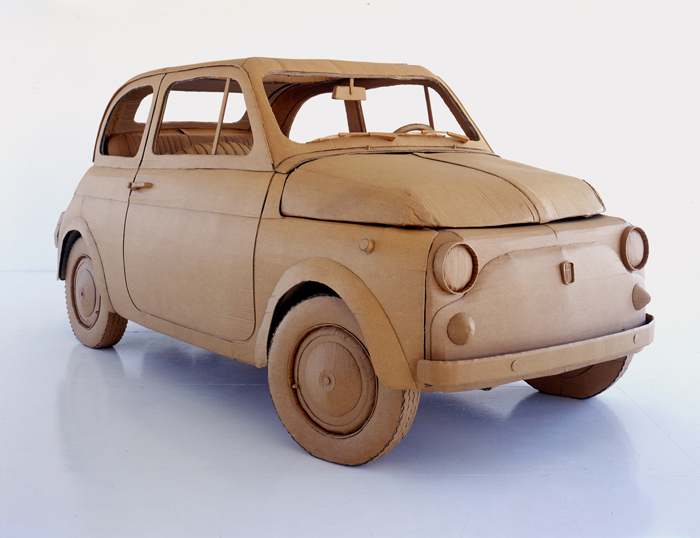
Chris Gilmour (my friends cousin) is an artist who now lives and works in Udine, Italy. He works predominantly with cardboard, creating life-size and hyper-realistic models of various day-to-day objects. For the most part, he uses 'very clean cardboard' but has recently started to use found materials and consumer packaging.
"Earlier works were made with very clean cardboard because I was aiming at a hyper-realistic effect which showed the material “at its best”, or rather seemed to do something impossible with it, making a perfect representation."


"Earlier works were made with very clean cardboard because I was aiming at a hyper-realistic effect which showed the material “at its best”, or rather seemed to do something impossible with it, making a perfect representation."



Object: Cardboard - Uses
Packing and moving
Shipping
Storage
Rubbish bin
Arts & Crafts
Business cards
Playing cards
Signs
Toilet paper roll
Makeshift home
Childrens playhouse/fort
Wine rack
Insulation
Postcards
Packaging
Cereal
Medication
Shoes
Drinks
Washing tablets
Flat-pack furniture
Shipping
Storage
Rubbish bin
Arts & Crafts
Business cards
Playing cards
Signs
Toilet paper roll
Makeshift home
Childrens playhouse/fort
Wine rack
Insulation
Postcards
Packaging
Cereal
Medication
Shoes
Drinks
Washing tablets
Flat-pack furniture
Object: Cardboard - Types
Card stock
Card stock is a paper stock that is thicker and more durable than normal writing or printing paper, but thinner and more flexible than other forms of paperboard. Card stock is often used for business cards, postcards, playing cards, catalog covers, scrapbooking, and other uses which require higher durability than regular paper. The texture is usually smooth, but can be textured, metallic, or glossy.
Corrugated card
Corrugated fiberboard is a paper-based material consisting of a fluted corrugated sheet and one or two flat linerboards. It is widely used in the manufacture of corrugated boxes and shipping containers. The corrugated medium and linerboard are made of containerboard, a paper-like material usually over 0.01 inches (0.25 mm) thick. Paperboard and corrugated fiberboard are sometimes called cardboard, although cardboard might be any heavy paper-pulp based board.

Binders board
Binder's board is a paperboard used in bookbinding for making hardcovers which are normally acid free.

Carton board
Also called solid cardboard, or boxboard, this board is thin and has a smooth coating on one side which is applied during the manufacturing process. This smooth side is for gluing printed paper or foil to the cardboard or it can be printed on in a printing press. Carton board is used for boxes made to package items such as cosmetics, cereals and other food products, computer software and video games. It is also cut and folded for use in the packaging of children's toys (i.e., action figures), hair accessories and liquor bottles. This board is made to be water resistance and remain flat.

Pasteboard
Pasteboard is usually used for business cards, aperture cards, postcards, playing cards and catalogue covers.

Card stock is a paper stock that is thicker and more durable than normal writing or printing paper, but thinner and more flexible than other forms of paperboard. Card stock is often used for business cards, postcards, playing cards, catalog covers, scrapbooking, and other uses which require higher durability than regular paper. The texture is usually smooth, but can be textured, metallic, or glossy.
Corrugated card
Corrugated fiberboard is a paper-based material consisting of a fluted corrugated sheet and one or two flat linerboards. It is widely used in the manufacture of corrugated boxes and shipping containers. The corrugated medium and linerboard are made of containerboard, a paper-like material usually over 0.01 inches (0.25 mm) thick. Paperboard and corrugated fiberboard are sometimes called cardboard, although cardboard might be any heavy paper-pulp based board.

Binders board
Binder's board is a paperboard used in bookbinding for making hardcovers which are normally acid free.
Carton board
Also called solid cardboard, or boxboard, this board is thin and has a smooth coating on one side which is applied during the manufacturing process. This smooth side is for gluing printed paper or foil to the cardboard or it can be printed on in a printing press. Carton board is used for boxes made to package items such as cosmetics, cereals and other food products, computer software and video games. It is also cut and folded for use in the packaging of children's toys (i.e., action figures), hair accessories and liquor bottles. This board is made to be water resistance and remain flat.

Pasteboard
Pasteboard is usually used for business cards, aperture cards, postcards, playing cards and catalogue covers.

Object: Cardboard
A definition (or lack of)
Cardboard is a generic term for a heavy-duty paper of various strengths, ranging from a simple arrangement of a single thick sheet of paper to complex configurations featuring multiple corrugated and uncorrugated layers.
In business and industry, material producers, container manufacturers, packaging engineers, and standards organisations, try to use more specific terminology. There is still not complete and uniform usage. Often the term "cardboard" is avoided because it does not define any particular material.
Origin
The term has been used since at least as early as 1683, with a publication of that year stating that "The scabbards mentioned in printers' grammars of the last century were of cardboard or millboard". The Kellogg brothers first used cardboard cartons to hold their flaked corn cereal, and later when they began marketing it to the general public a heat-sealed waxed bag of Waxtite was wrapped around the outside of the box and printed with their brand name. This marked the origin of the cereal box, though in modern times the sealed bag is plastic and is kept inside the box rather than outside. Another early American packaging industry pioneer was the Kieckhefer Container Company, run by John W. Kieckhefer, which excelled in the use of fibre shipping containers, which especially included the paper milk carton.
Flutes
When dealing with differing types and styles of cardboard, we often refer to its flute, or flutes. What is a flute? Well, it simply means the type of corrugation that is sandwiched between the two outer layers of cardboard. The larger the flute, the stronger the box.
Cardboard is a generic term for a heavy-duty paper of various strengths, ranging from a simple arrangement of a single thick sheet of paper to complex configurations featuring multiple corrugated and uncorrugated layers.
In business and industry, material producers, container manufacturers, packaging engineers, and standards organisations, try to use more specific terminology. There is still not complete and uniform usage. Often the term "cardboard" is avoided because it does not define any particular material.
Origin
The term has been used since at least as early as 1683, with a publication of that year stating that "The scabbards mentioned in printers' grammars of the last century were of cardboard or millboard". The Kellogg brothers first used cardboard cartons to hold their flaked corn cereal, and later when they began marketing it to the general public a heat-sealed waxed bag of Waxtite was wrapped around the outside of the box and printed with their brand name. This marked the origin of the cereal box, though in modern times the sealed bag is plastic and is kept inside the box rather than outside. Another early American packaging industry pioneer was the Kieckhefer Container Company, run by John W. Kieckhefer, which excelled in the use of fibre shipping containers, which especially included the paper milk carton.
Flutes
When dealing with differing types and styles of cardboard, we often refer to its flute, or flutes. What is a flute? Well, it simply means the type of corrugation that is sandwiched between the two outer layers of cardboard. The larger the flute, the stronger the box.
Subscribe to:
Posts (Atom)